
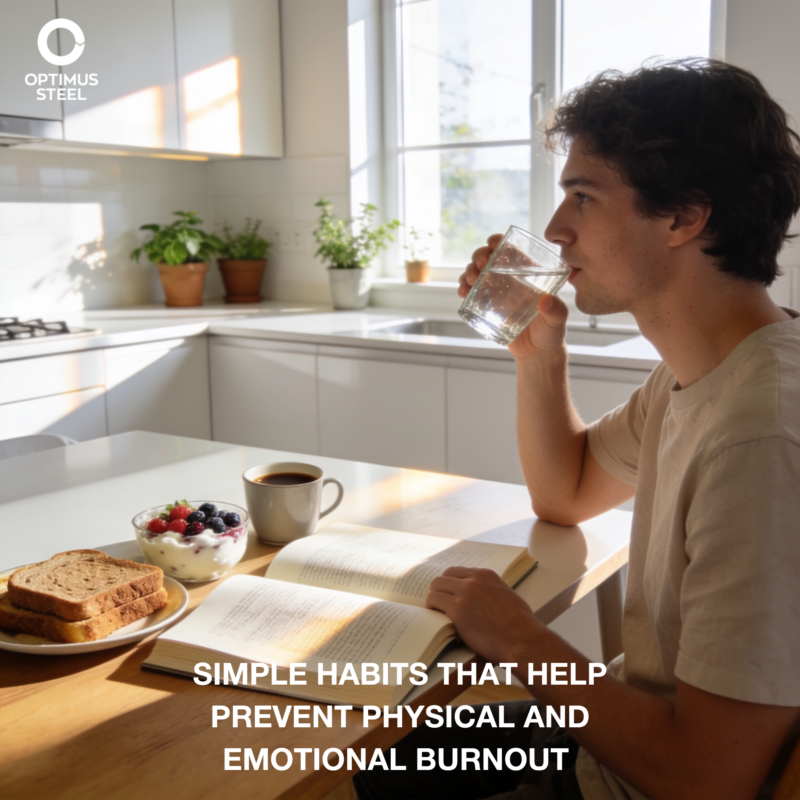
Physical and emotional burnout rarely happens overnight. Most of the time, it builds gradually, with long workdays, constant pressure, lack of rest, and the feeling of having to respond to everything. Over time, this can affect our energy, concentration, health, and the way we relate to others.
The good news is that preventing burnout does not always require radical changes. In fact, simple and consistent habits often make the biggest difference. Small daily actions can help us protect our energy, maintain mental clarity, and sustain a healthier pace of life.
- Start the day with intention, not urgency
Many people begin their day by checking emails, messages, or pending tasks. This immediately activates a sense of urgency that can increase stress from the very start. Instead, taking a few minutes to begin the day calmly can completely change the tone of the day.
Drinking water, stretching, taking deep breaths, or simply organizing the day’s priorities in your mind can help prepare you for what’s ahead. It doesn’t have to be a long routine —five minutes can make a difference.
- Take real breaks during the day
Working nonstop may seem productive, but it actually reduces concentration and increases fatigue. The brain needs breaks to recover. Getting up from your desk, taking a short walk, looking out the window, or briefly disconnecting from screens helps recharge your energy.
These short breaks also help reduce physical tension that builds up in the body, especially in the neck, shoulders, and back.
- Listen to your body’s signals
The body often lets us know when something isn’t right, such as constant fatigue, headaches, muscle tension, or difficulty concentrating. Ignoring these signals can lead to greater exhaustion.
Paying attention to these signs allows you to make small adjustments in real time: resting a little more, hydrating, moving your body, or even reconsidering the pace of the day. Taking care of physical health is a fundamental part of emotional balance.
- Set healthy boundaries
One of the most common causes of burnout is the feeling that we must be available all the time. Learning to set clear boundaries with work, commitments, and how we use our time is key to protecting our energy.
This may mean redefining schedules with certain boundaries. Boundaries don’t have to be barriers; they are a way to protect personal well-being.
- Maintain spaces outside of work
When all our energy is directed solely toward work, exhaustion sets in more quickly. Having activities that bring enjoyment or relaxation is essential. Exercising, walking, reading, practicing yoga, or spending time with friends helps create balance in daily life.
- Prioritize rest
Sleeping well is one of the most important factors in preventing burnout. Proper rest improves concentration, regulates emotions, and helps the body recover.
Small habits such as reducing phone usage before bed, maintaining a more consistent sleep schedule, or creating a calm nighttime routine can significantly improve sleep quality.
- Talk about how you feel
Stress becomes heavier when it is carried in silence. Sharing how you feel with someone you trust—a friend, family member, or colleague—can relieve emotional pressure.
Talking does not always solve the problem immediately, but it helps process it and see it from a different perspective.
Well-being does not depend on doing everything perfectly, but on incorporating small actions that, over time, support our energy and emotional health.